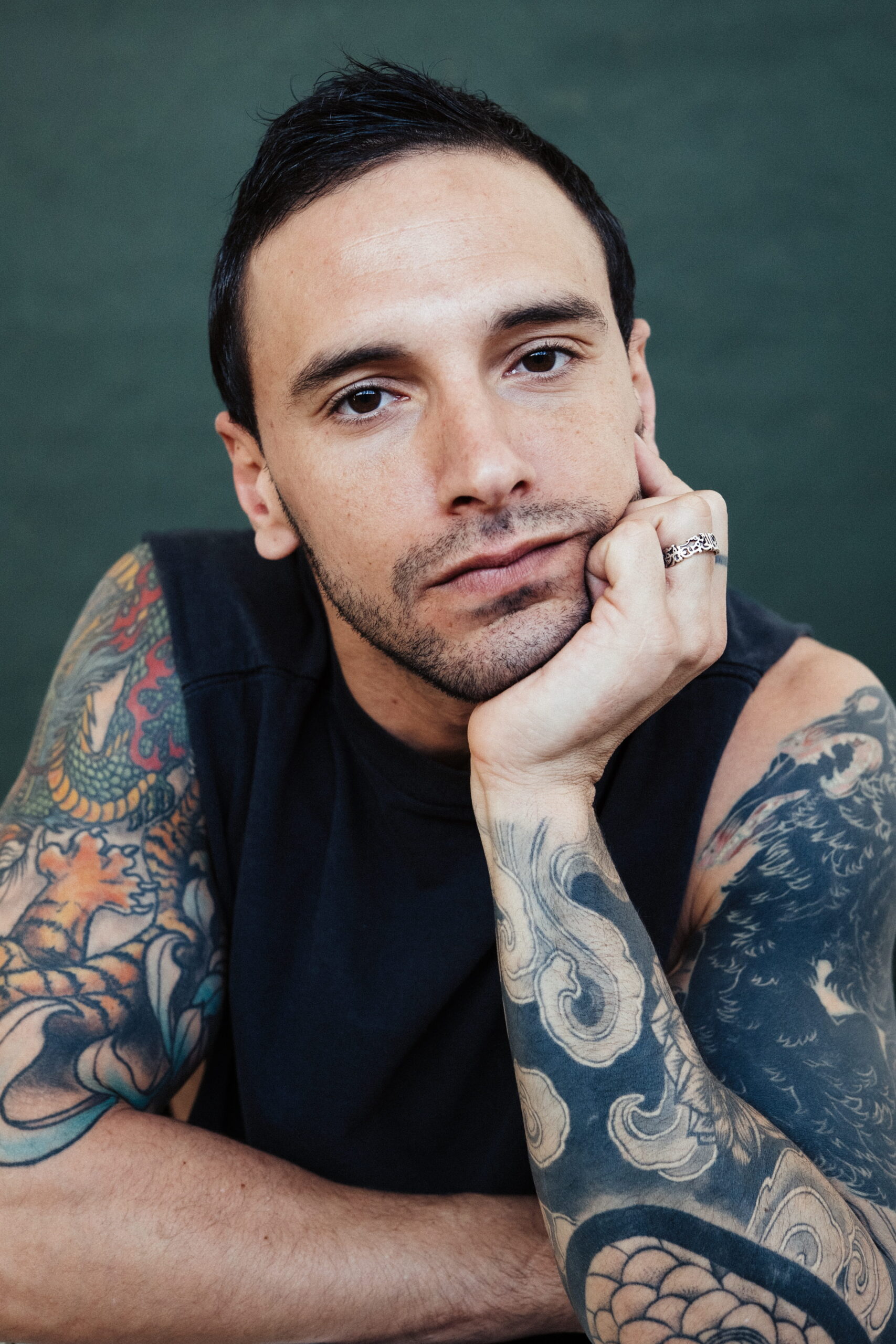
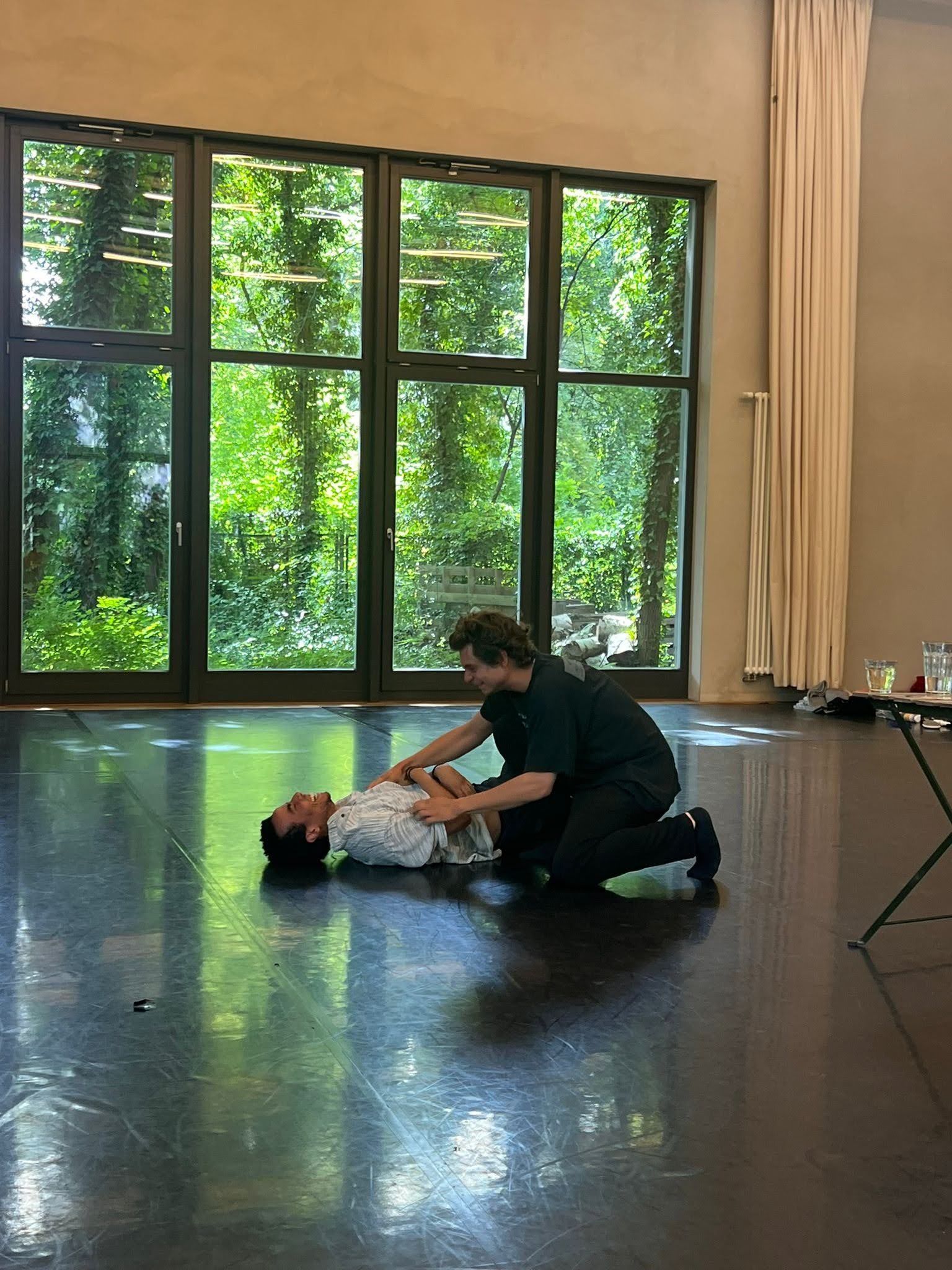
On Being Trevised: Verb, to fall under the uncompromising direction of Di Trevis- June 2026
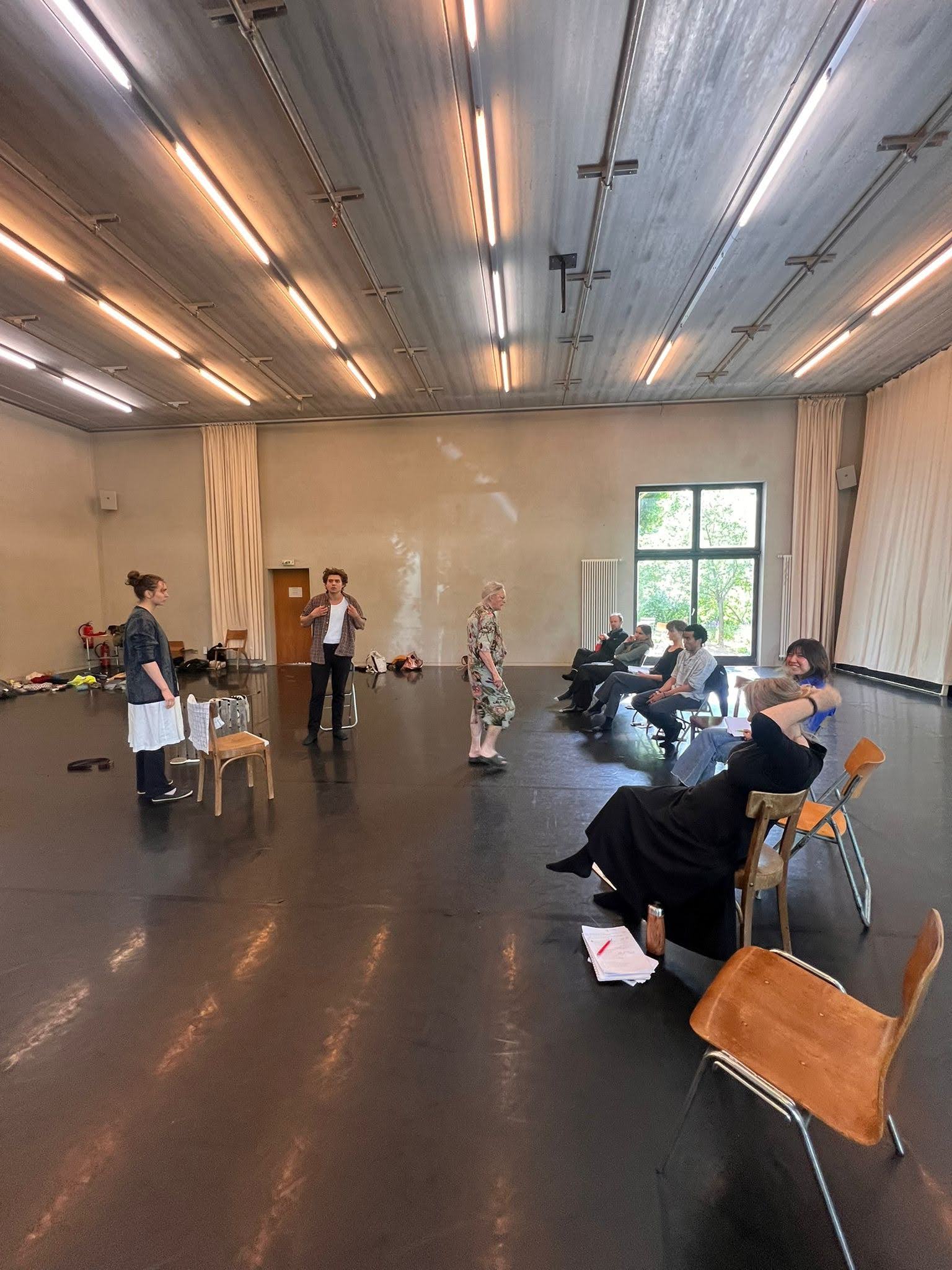
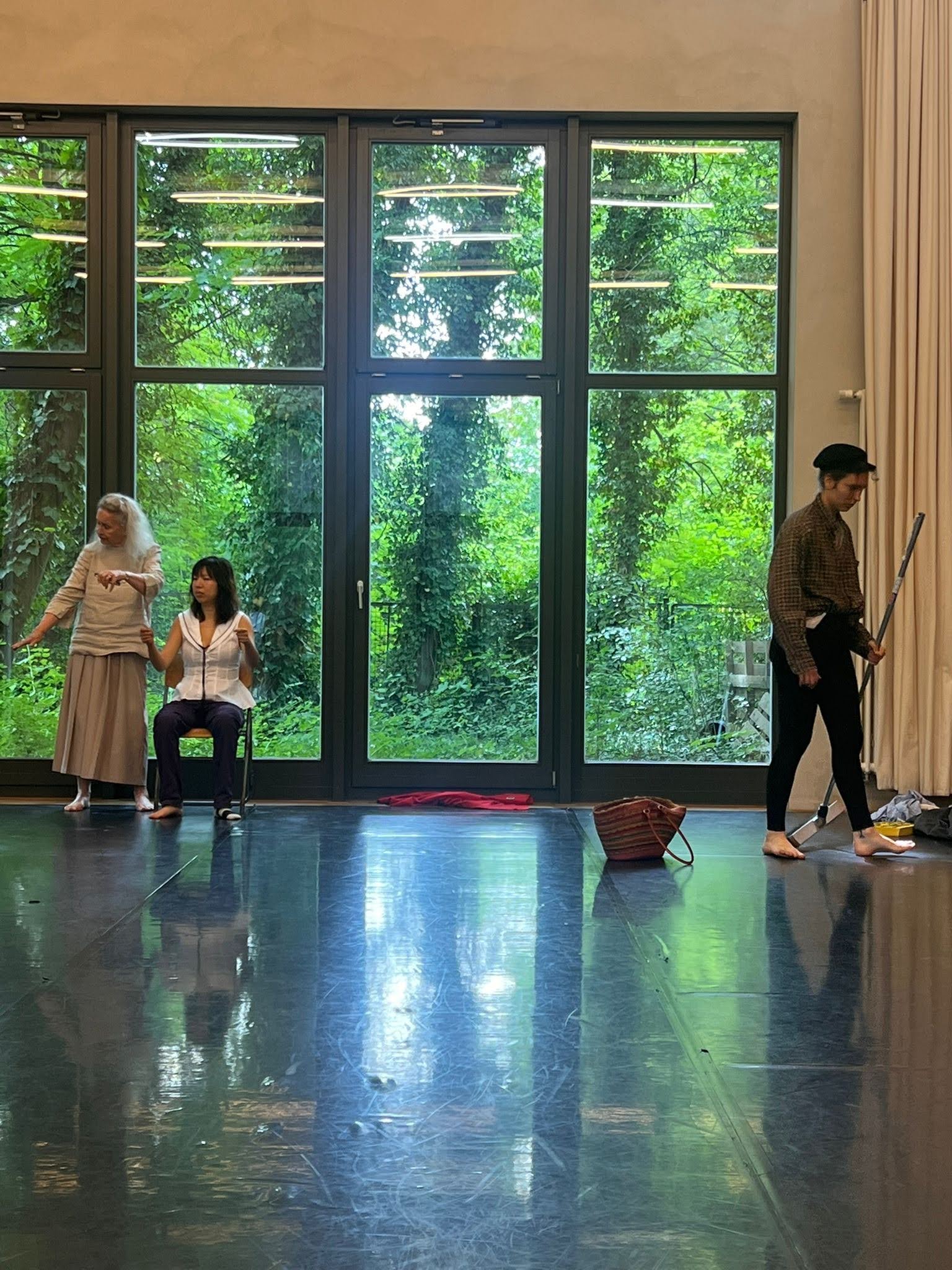
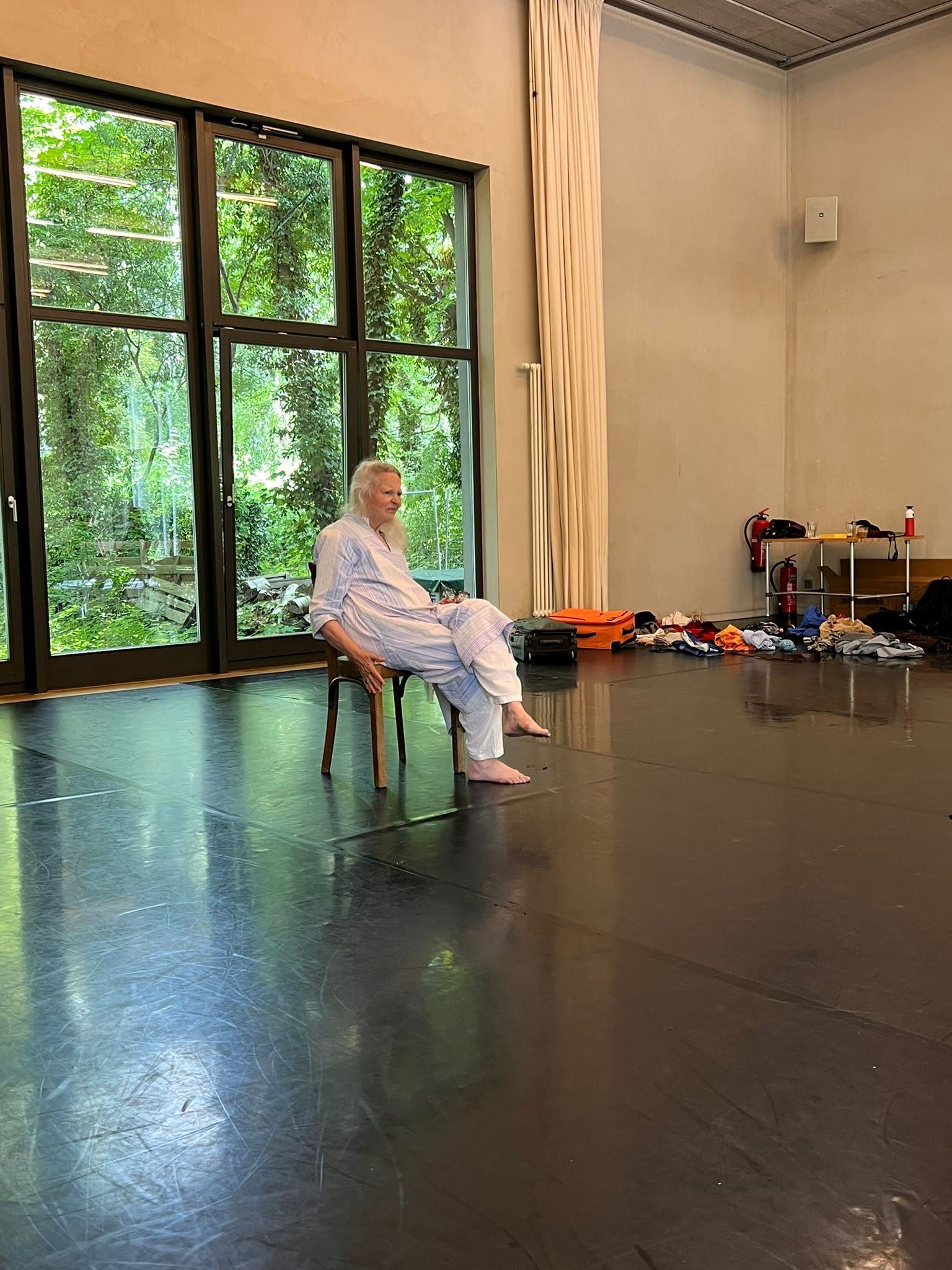
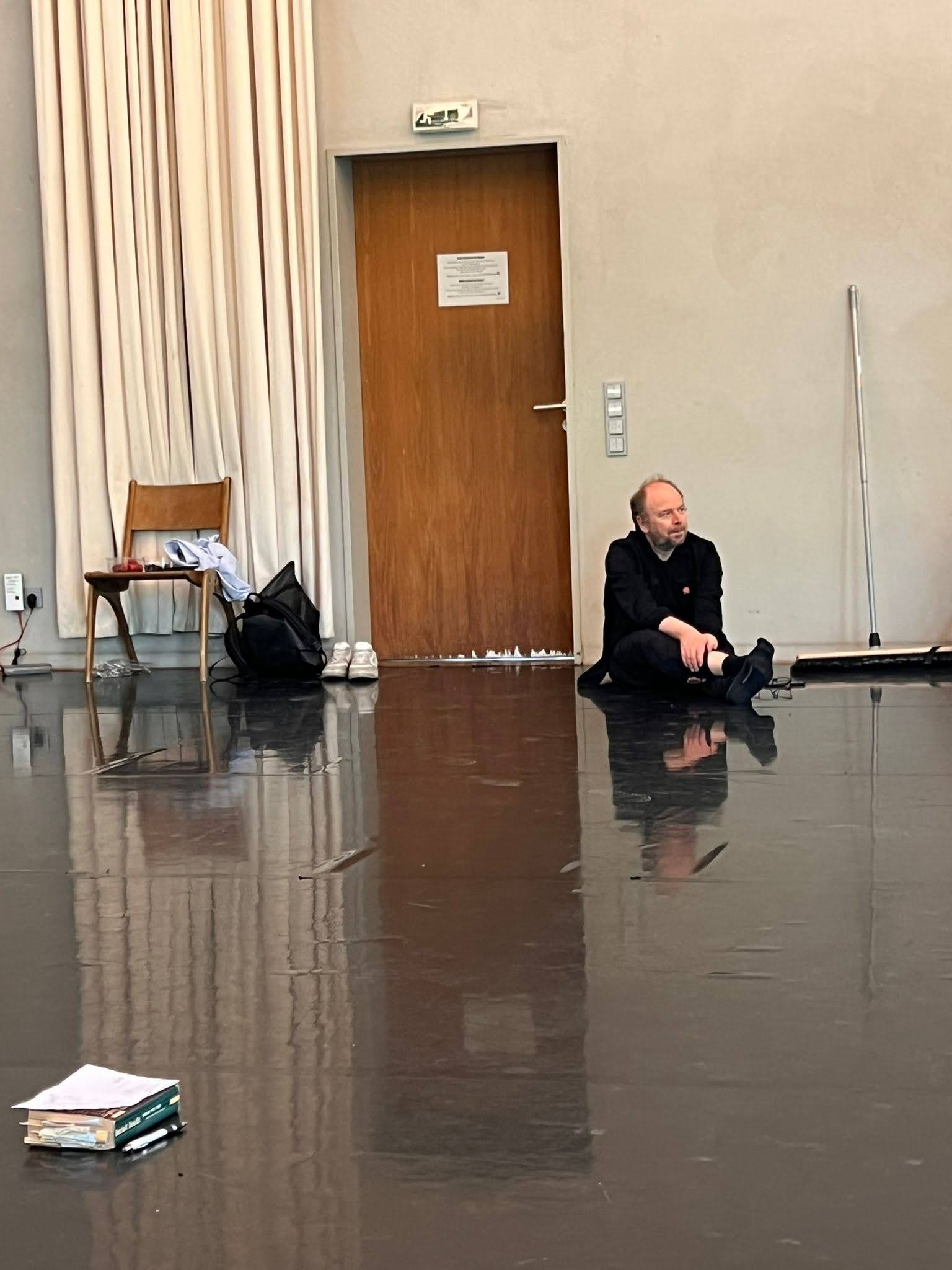
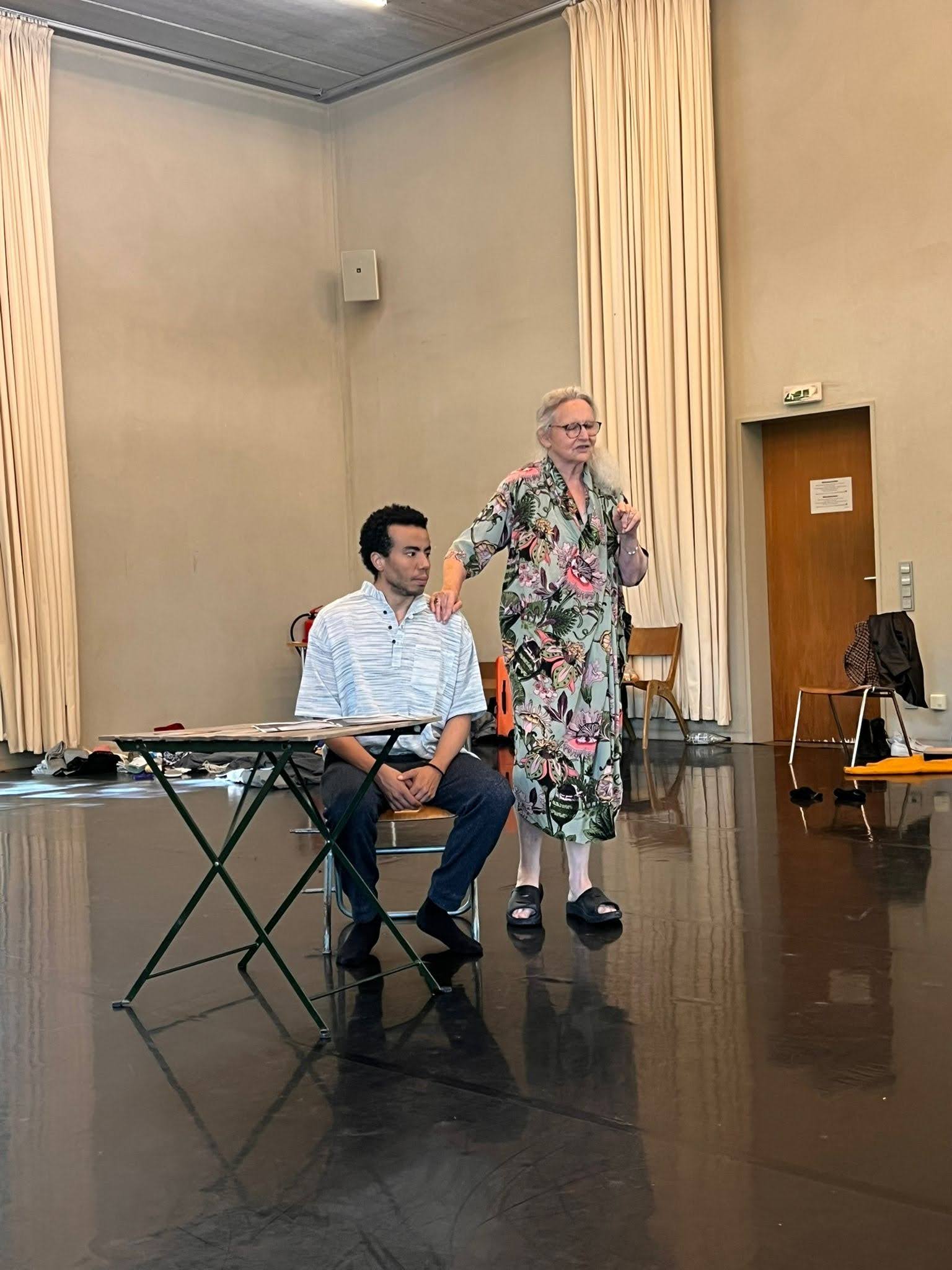
When Di Trevis told us that she doesn’t really plan her workshops and that this particular workshop, Scenes of Struggle and Resistance, was one she had never taught before, I remember thinking it could be either incredibly exciting or completely terrifying. It turned out to be something that transcended both, and I’m not being hyperbolic.
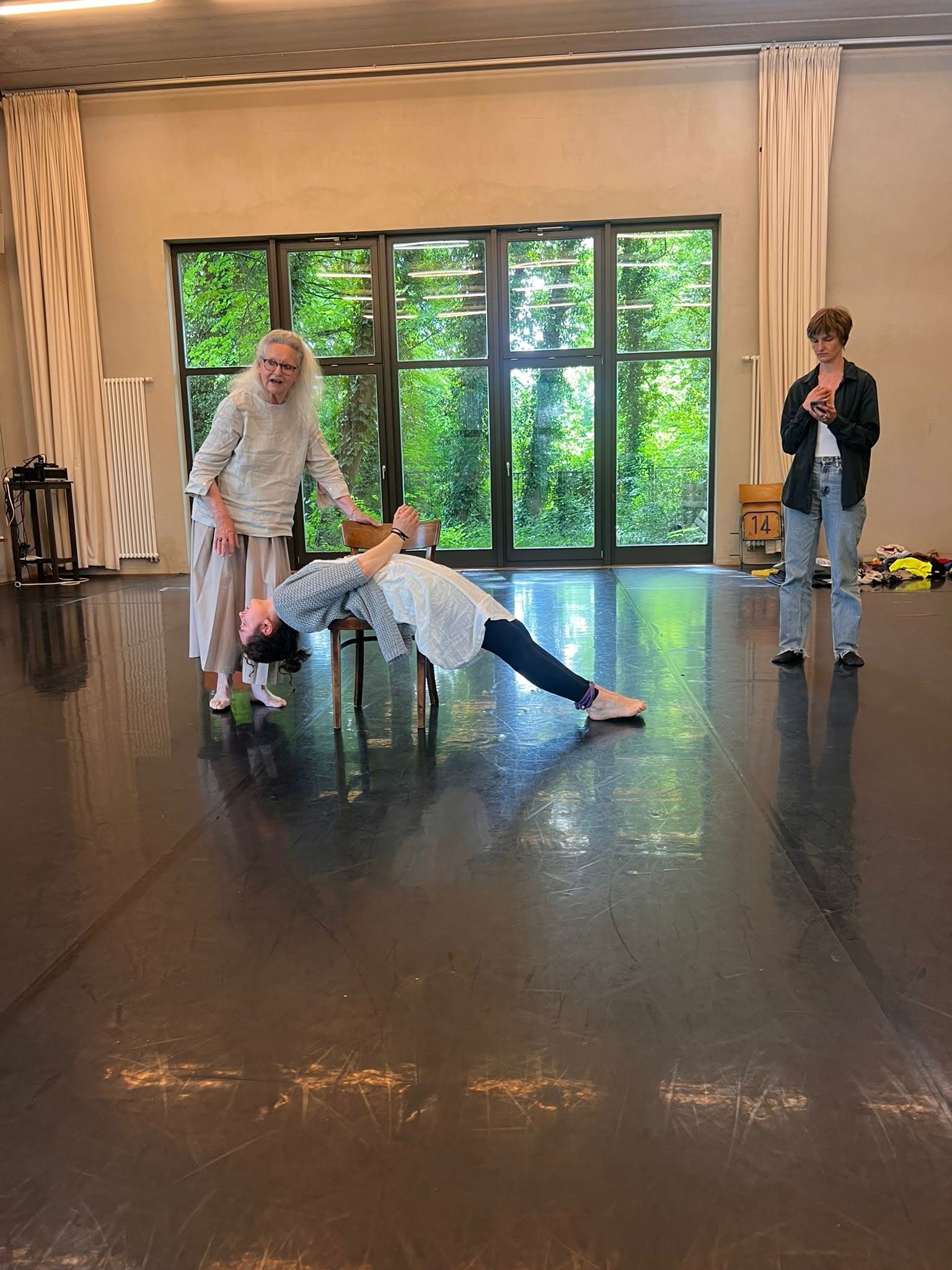
What became apparent very quickly was that the absence of a rigid plan did not mean the absence of direction—quite the opposite. Di possesses the kind of theatrical intelligence that only comes from decades of working at the highest level. Political history, literature, acting, directing, social behaviour, text analysis, rhythm, language, and staging seem to live in the same room inside her mind. Throughout the six days, she moved between them with remarkable ease, constantly drawing connections that clarified the work without ever turning it into an academic lecture.
What impressed me most, besides her towering CV, was her ability to make ideas practical. Having spent years in Jenin teaching theatre, Di knows a thing or two about politics and resistance, and I’m being understated.
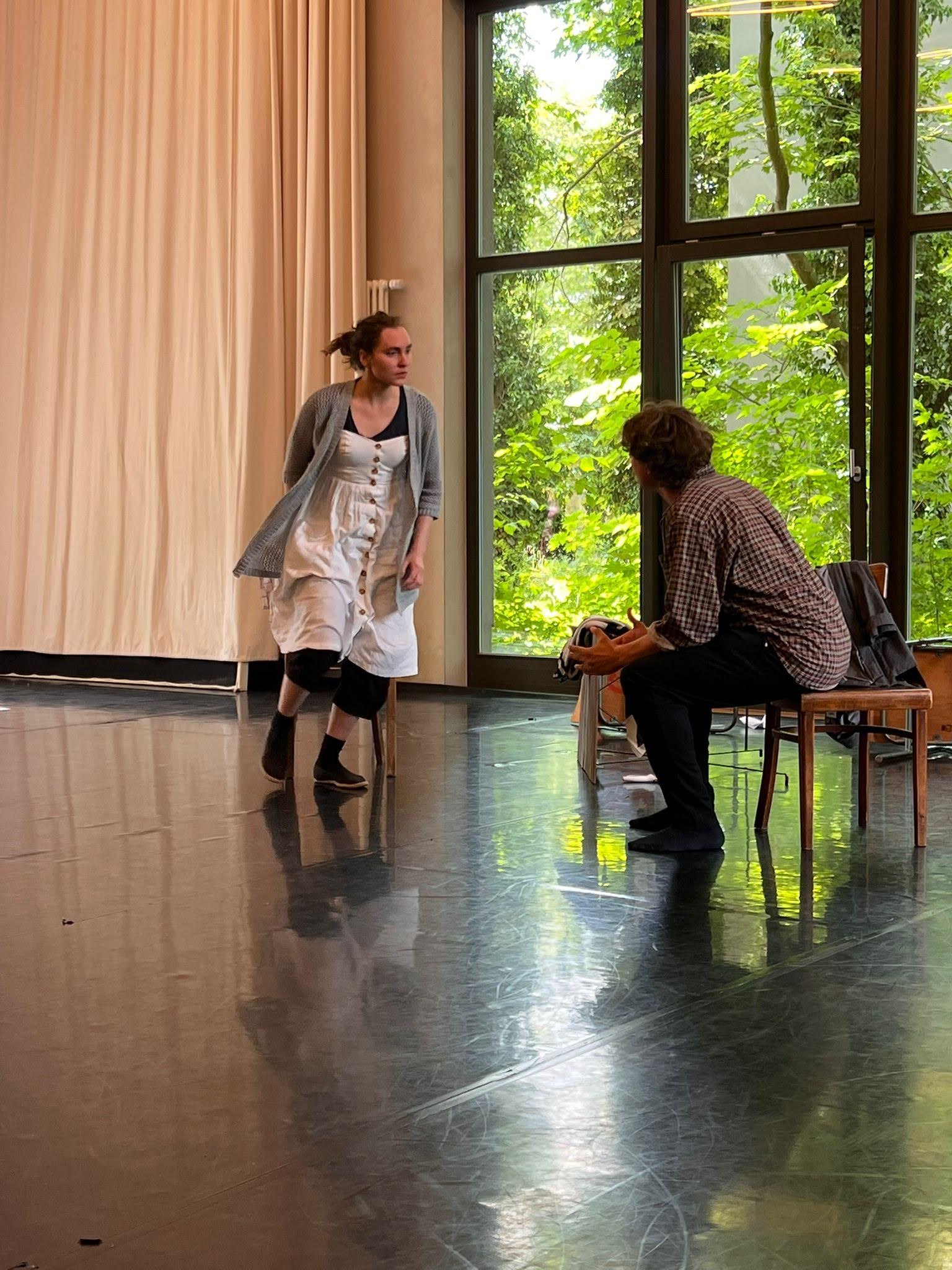
Political theatre is one of those subjects that can easily become trapped in theory; the workshop never was. Through Brecht, Clifford Odets, James Fenton, song, poetry, movement, and scene work, we were constantly asked to investigate human behaviour rather than abstract concepts. How does power manifest itself? What does resistance look like? What is justice? How do people behave when confronted by authority, oppression, responsibility, or fear? And the acting that’s required to engage with these questions truthfully.
One of the recurring ideas throughout the workshop concerned justice as a way of observing the world. In her essay on Brecht, Acting is not Theoretical, Di discusses the idea of gestus, a key element of Brechtian theatre through which actors reveal a character’s social attitude and relationship to the world. To illustrate this, she describes exercises that explore subtle distinctions between qualities that appear similar yet are fundamentally different: “strong versus crude, quick versus hurried, imaginative versus digressive, relaxed versus loose.” These distinctions may seem small, but they are where truthful observation begins. Political theatre, as I came to understand it through this workshop, is not about delivering political messages, rather about developing the ability to observe human behaviour with precision and fairness.
The workshop transformed the way I think about text. Di repeatedly brought us back to the words themselves. When actors become uncertain, they often abandon the text and retreat into general emotion. “The text will always take you there,” she told us. If a phrase felt unclear, one solution was to create a vivid image from it and let the image guide the thought. “A full stop is the clearest, surest message you can get from the writer,” she said. Likewise, she constantly reminded us not to “hover over lines”. Trust the language, speak the thought, move forward, is what I gathered.
What struck me was how much freedom emerged from this rigour. Many actors, particularly early in their training, think, explicitly or implicitly, that they must generate everything from themselves: their memories, emotions, personal histories, or endless character analysis. Di’s work repeatedly pointed in another direction. Costumes do the work, objects do the work, circumstances do the work, actions do the work, and language does the work. One of the most memorable moments of the workshop came when she demonstrated the use of a prop during a Clifford Odets scene, describing the action of Edna folding a shirt as, “Do it like you’re going to fuck someone else.” The remark was funny, provocative, and entirely practical. The point was not the shirt; it was the desire. The object and the gestus became alive when charged with intention.
This is what I believe now to be good direction. It has a way of exposing habits that actors would rather not see. Throughout the workshop, Di constantly reminded us to “never drop the baton,” her phrase for picking up the energy, thought, and tone of the person opposite you and carrying it forward. In commenting on my own tendency to drop the baton, she observed aspects of my work that raised questions about presence, voice, and my relationship to the act of occupying space on stage.
Her forensic eye and commitment to the truth showed me my fears of not being seen and, paradoxically, of performing too much to be seen. As much as I understand the dangers of collapsing personal psychology into the acting process, let’s face it, everyone falls into that trap. Thankfully, I’m old enough and therapized enough to know how not to stay in that trap. There was no interest in self-analysis for its own sake. The focus remained on the craft. The question was never, “Why are you like this?” but rather, “What is happening on stage, and how can it be clearer, more truthful, and more alive?” I left with a clearer understanding of where my work needs to go, and perhaps more importantly, how to get there.
Our final performance demonstrated the full extent of Di’s skill as a director. What had initially appeared to be a collection of separate exercises, songs, poems, scenes, and discussions revealed itself on the final day as a single, coherent composition. We performed all of our individual pieces as an ensemble. Every entrance, transition, pause, seating, gesture, and cue had been considered. The result never felt mechanical despite the obsessive attention to detail. Watching the various pieces come together into a coherent theatrical event was perhaps the clearest lesson of all. At that point, the apotheosis of the workshop, we were all in the presence of world-class directing.
If ayahuasca is often described as years of therapy compressed into a handful of ceremonies, then six days with Di Trevis felt like years of acting lessons compressed into a single workshop. Not because one suddenly becomes a better actor, or because the work is somehow finished. Quite the opposite. You leave acutely aware of how much work remains. But you have glimpsed something you cannot unsee. You have been shown a level of truthfulness, precision, and observation that permanently alters your understanding of the craft. Whether you can consistently reach that level is another matter entirely. The point is that you now know it exists.
My gratitude goes first to Di Trevis for six days of extraordinary generosity and insight. It also goes to Matthias Schott and the Schott Acting Studio for continuing to create opportunities for actors to work with artists of this calibre.
I feel as though I’ve been privy to a small miracle. I continue to love acting more and more because of people who dare to teach it honestly.
A list of quotes I’ve gathered from Di
On the subject of naturalistic acting and how we should avoid it using props and object endowment: “Your body is not your fucking tool.”
On the subject of enunciation and Schwa: “Vowels carry immersion, consonants carry the intent and meaning.”
On how actors misplay anger: “When in doubt, inexperienced actors play angry.”
On the subject of humanity’s persistent problems with resistance to power: “These are unsolved but not insoluble questions of humanity” – not sure if it’s you paraphrasing Brecht or an original Di Trevis.
On actions in acting: “At the core of it, every action is about fucking or killing.”
On moving away from naturalistic acting through Brechtian technique: “Get a gesture. Create a small situation that communicates the character’s state of mind. Don’t illustrate the emotion. Let the audience discover it through the action.” – I understood this as finding an action that reveals the inner life of the character rather than attempting to reproduce the emotion itself.
On political theatre: “Political theatre can’t be bogged down by naturalism — it’s not about reality, it’s about truth. It’s not about reality, but it has to be the truth!”
On getting out of our own way as actors: “Me and I are not important parts of the sentence.” A lesson that felt as relevant to life as it did to acting.
On men’s obsession with that thing between their legs and correctly naming it: “ The tassel between your legs”
On men’s emotional responsibility and the large context of them growing up to fight the patriarchy: “If men can’t get what they want from women, they often put it in your hand and cry for it.”
On stance, presence and being ready to speak on stage: “Don’t stand square, keep a bit of weight on the back foot. If needed, turn your back to the audience and start.”
On not being a little brat as an actor: “Don’t make any excuses when taking directions. Period.”
On actors failing to pronounce and its inevitable consequences: “The road to the unemployment office is paved with a lack of upward inflexion.”
On process: “Unless you take the first steps, you will never do the whole thing. You might cry, but there’s no pity in process, just work.”
On textual analysis and finding meaning in the language: “The text will always take you there. When in doubt, one of your tools is to create an image of the phrase and visualise it.”
On punctuation as action and thought: “A full stop is the clearest, surest message you can get from the writer.”
On trust and commitment to the line: “Don’t hover over your lines.”
On purposeful action with props: “This is how you use a prop: folding a shirt like you’re going to fuck someone else.” Said in relation to Joe and Edna, by Clifford Odets. A reminder that props are never neutral objects. They are charged by objective, desire, and circumstance.
On movement and intention: “On stage, there is always either fast walking or slow walking, never medium.” Most actors default to “normal” walking when they don’t know why they’re moving.
On presence: “You can’t get present enough. Presence is the building block of acting.”
On being comfortable on stage: “To untrained actors, the space on stage is a tank full of piranhas — you have to work so hard that you become one as well.”
On presence and generosity: “Don’t seek to dominate or be aggressive in your presence.” — stop trying to force the audience to look at you and instead give your attention to the action, the other person, and the truth of the moment.
Review: 3-Week Intensive Acting Course with Matthias Schott - December 2025
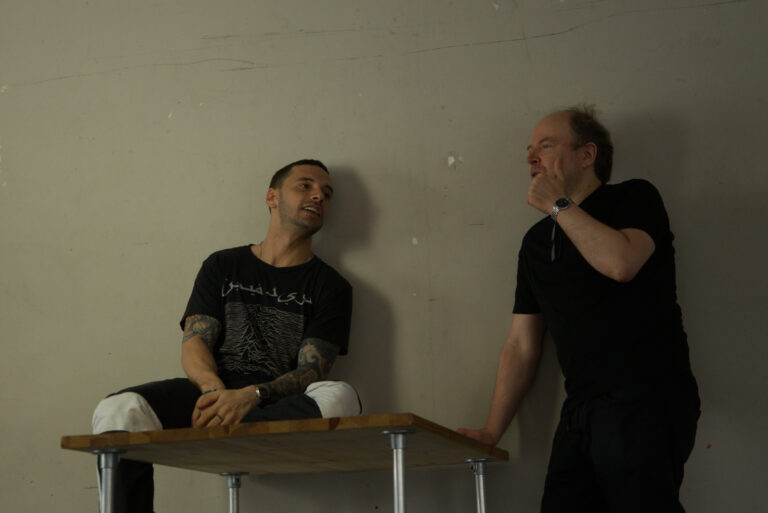
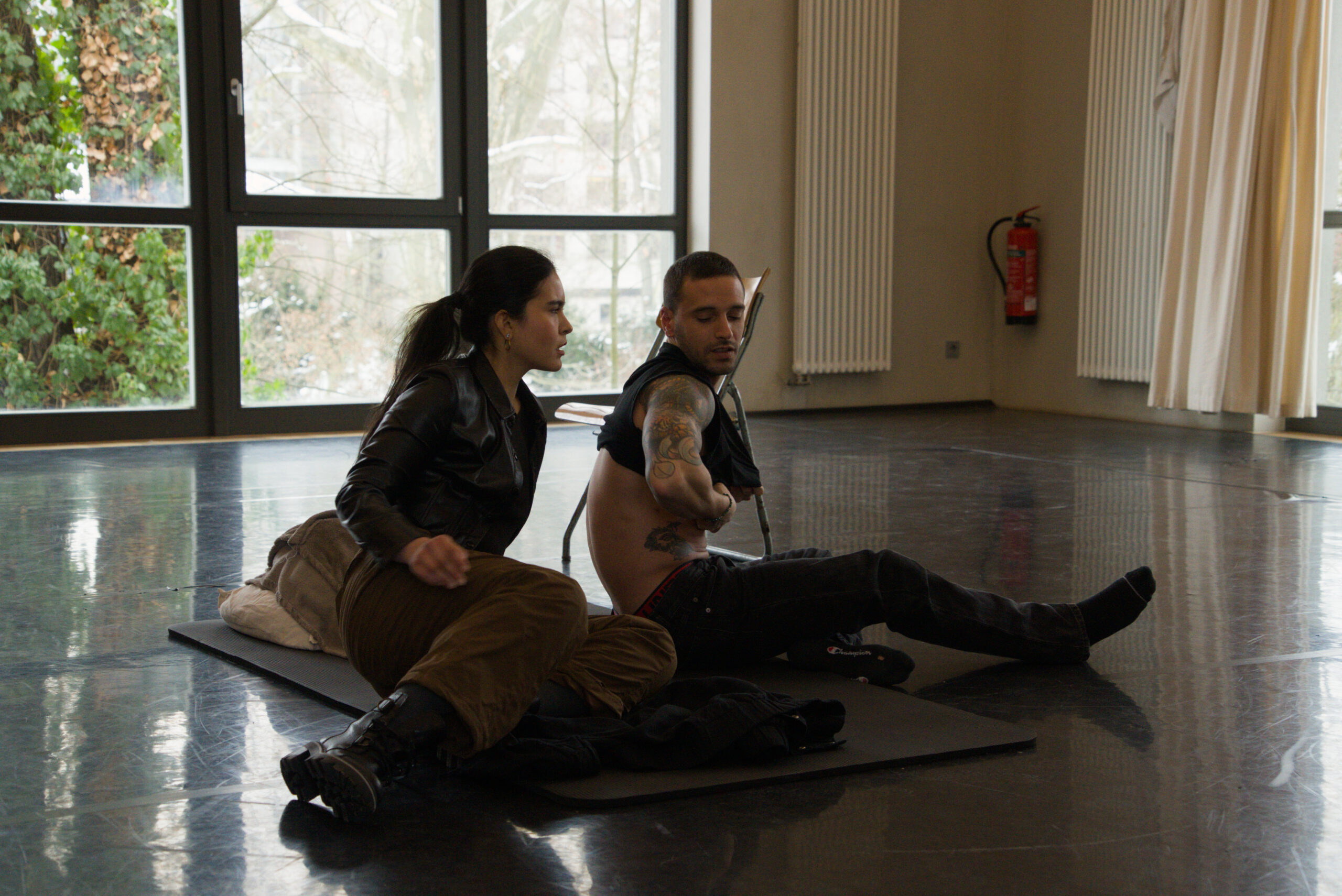
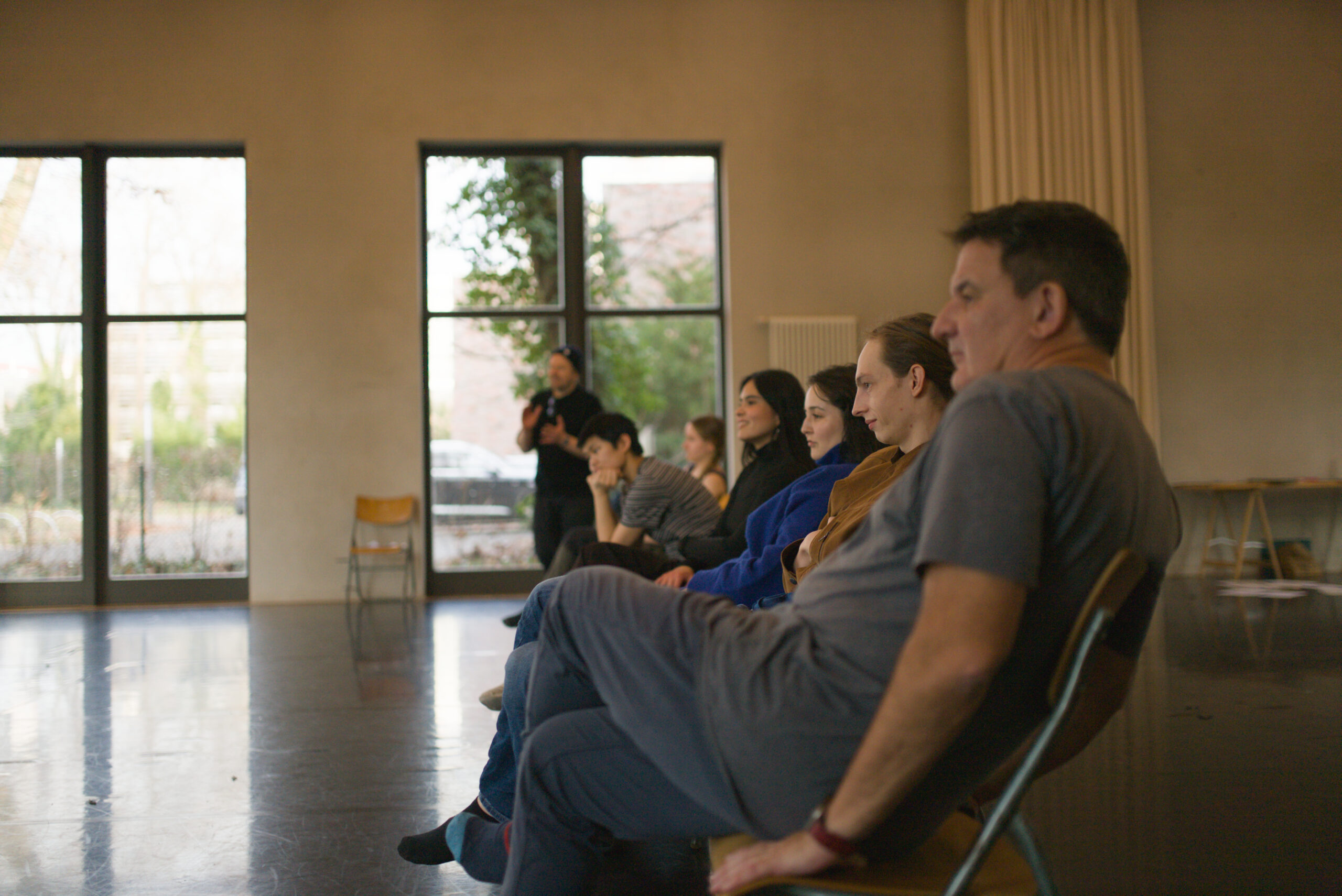
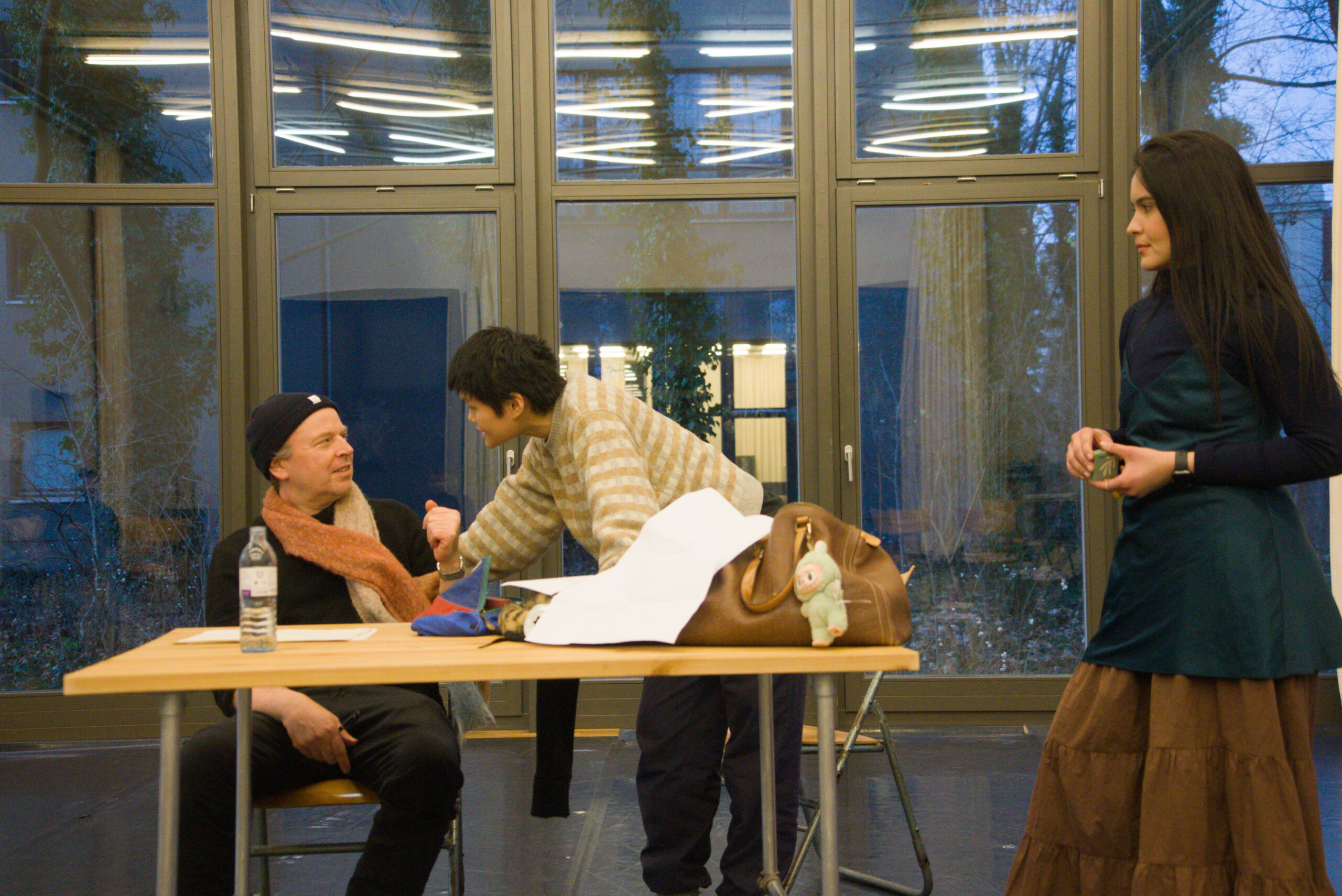
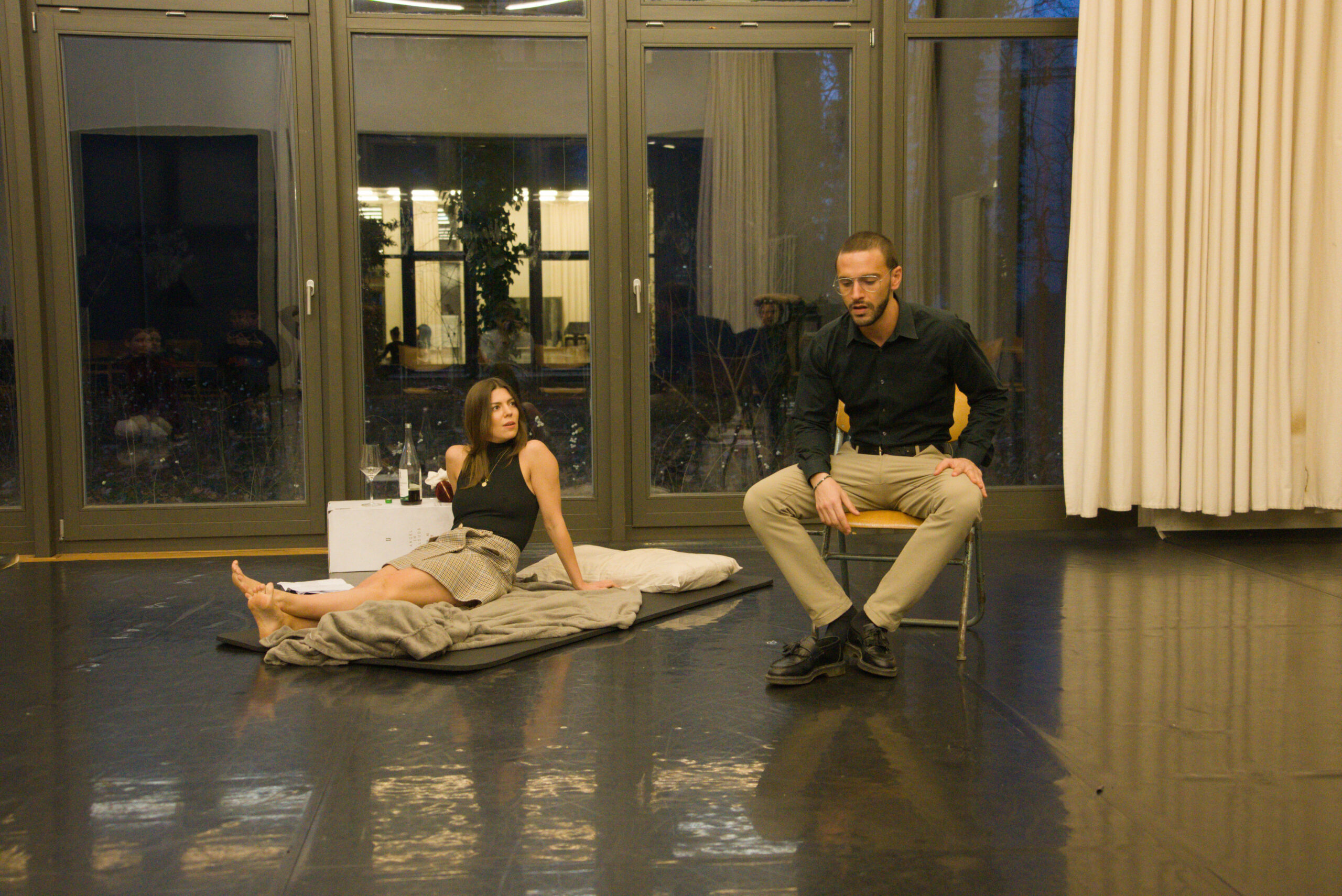
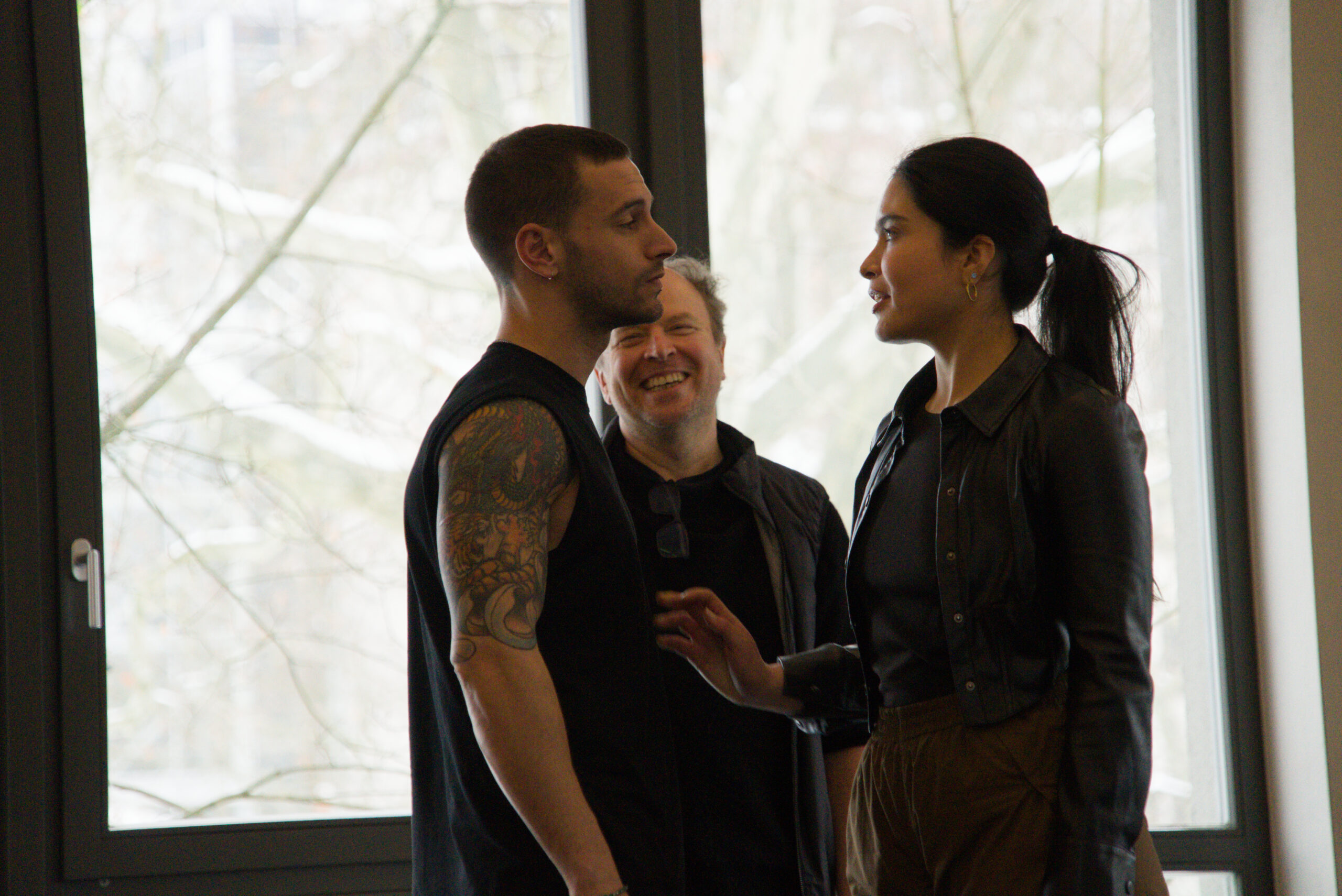
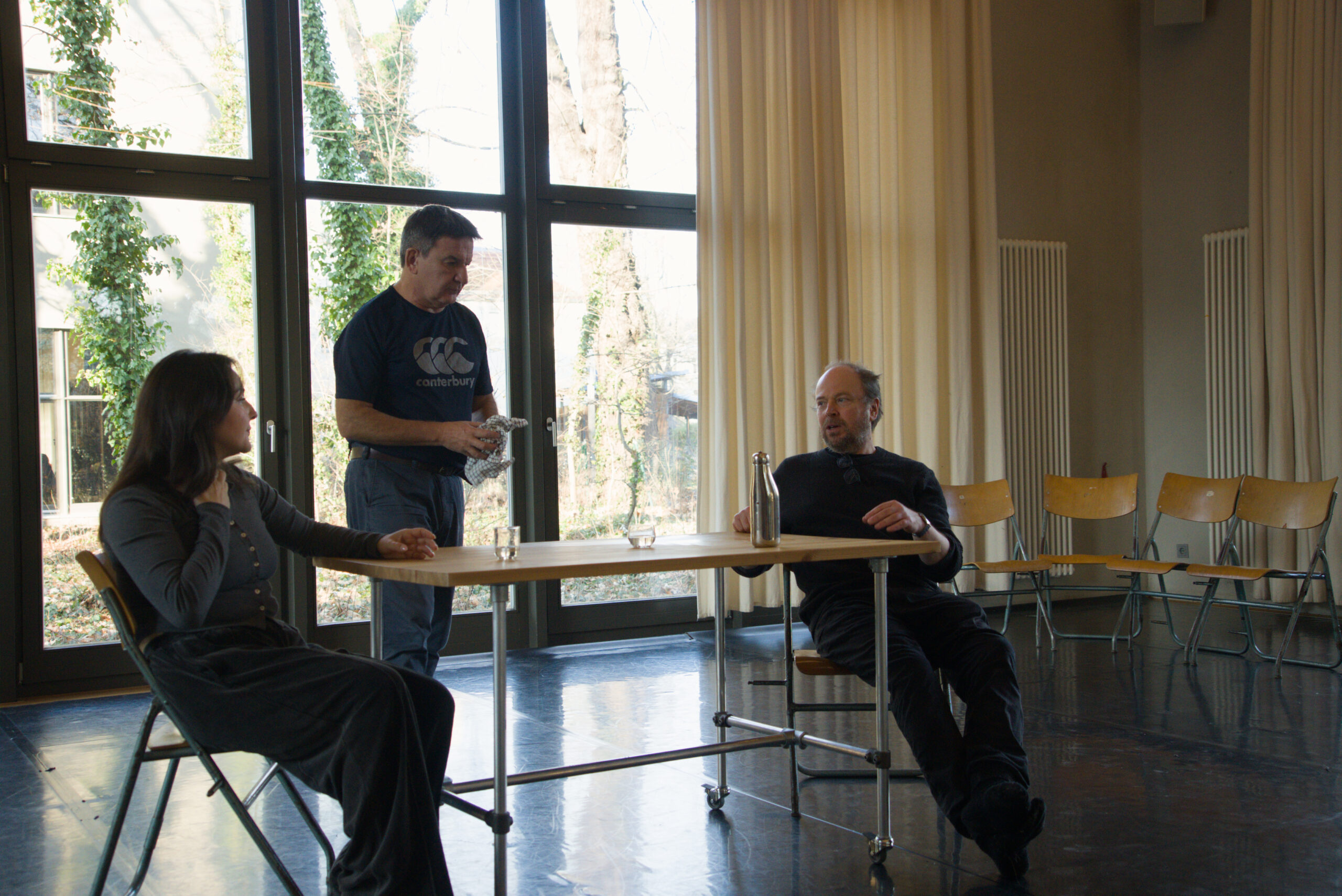
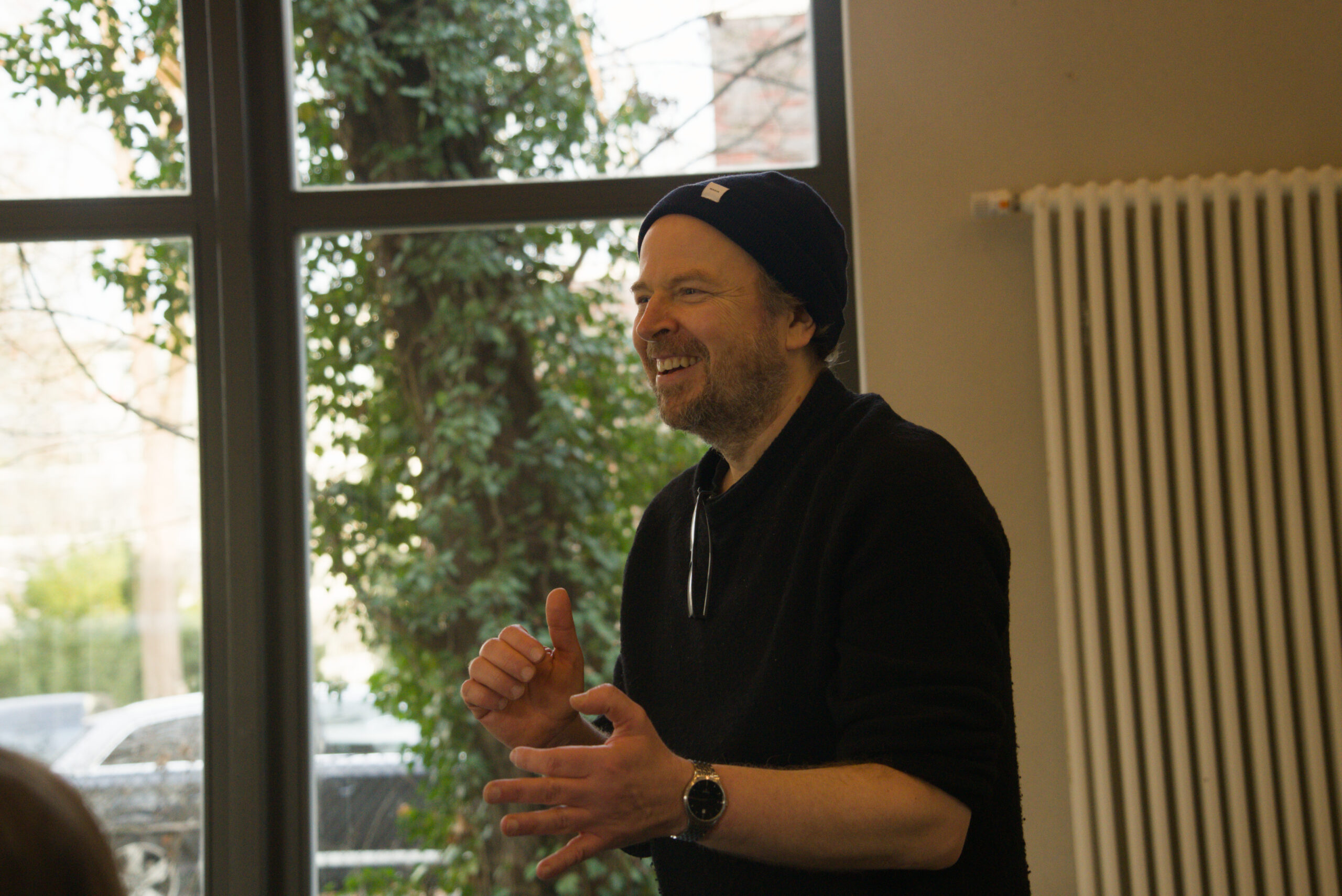
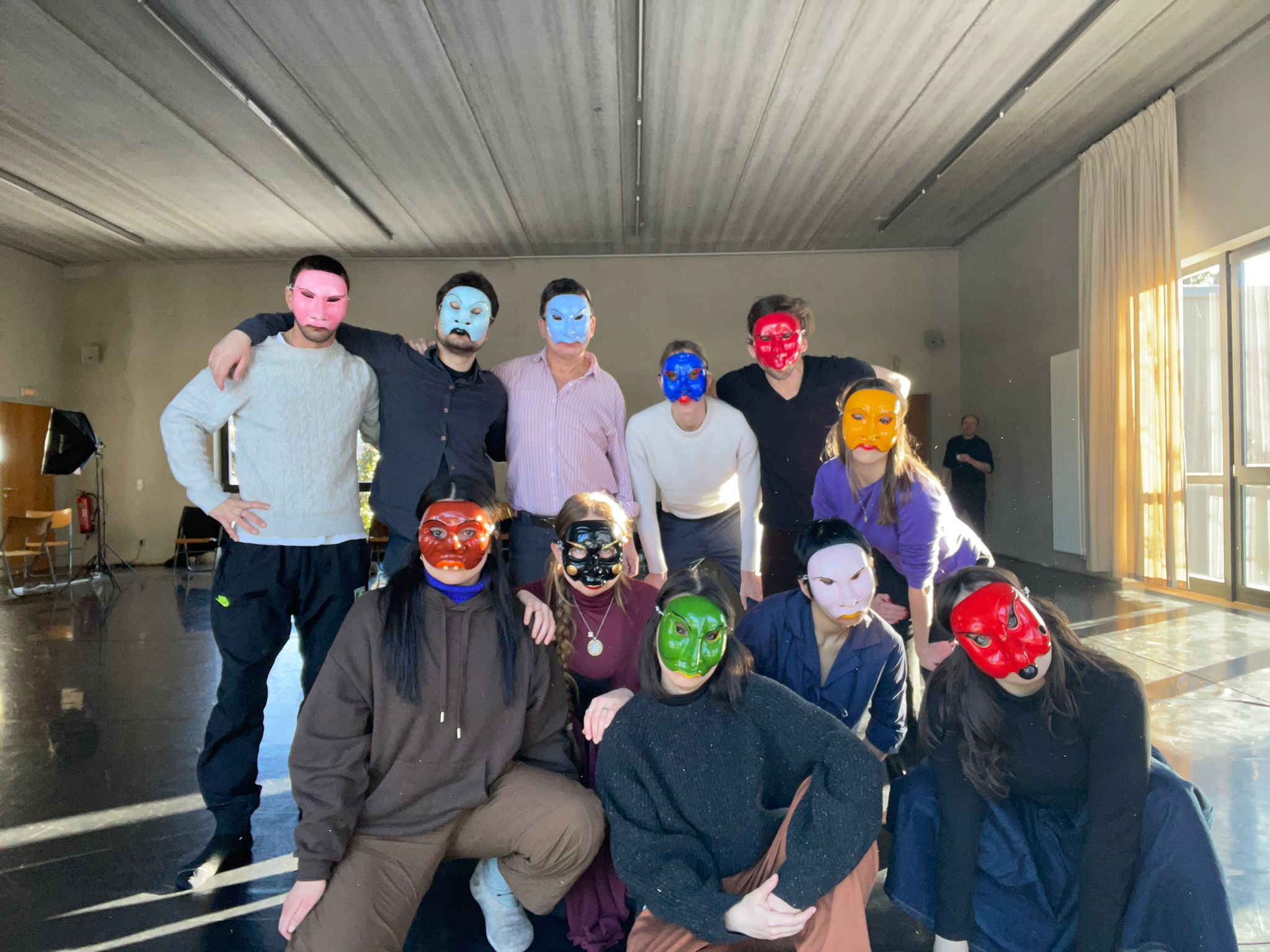
Last week, we wrapped Schott Acting Studio’s three-week intensive.
The course is taught by Matthias Schott. Reading his background, you’re kind of hit by the fact that he’s someone who won’t fuck around with teaching anyone; experiencing him teach is another story. As a personal cherry on top for me, he’s deeply Jungian, having studied and participated in a plethora (that’s right, I used plethora) of Jung-related courses and seminars. This facilitated my choice of investing in this course, but I digress.
The course runs almost daily, 10 to 5, for three weeks. Sundays included. The mission, stated clearly on his website, is to take an actor from “general to specific.” And that’s exactly what it did for me, as I know it did for my colleagues, and will do for anyone who takes this course.
In 2025, I attended numerous workshops and spent most of my savings doing so. I never went to drama school, can’t afford it now, and I’m always slightly jealous of those who did (Mashallah upon you if I threw you an evil eye for going to Drama School). I wanted something that could give me a real taste of it, an authentic exploration of the various aspects of an acting curriculum. Matthias delivered a learning experience that, in many ways, condensed what could be a full year of drama school into those three weeks. Please forgive the exaggeration if you actually went to drama school.
You can explore the program on his website, but I’ll say a few words from my perspective. The program was structured around building skills from the ground up, moving me from broad, general instincts to specific, actionable choices in performance. It drew on Stanislavski’s core ideas and expanded with exercises inspired by British drama schools, Uttah Hagen’s object work and the Meisner technique, combining improvisation, scene work, partner awareness, and vocal and physical expression. Over hours of practice, we worked on being spontaneous in the moment, responding truthfully to partners, and defining clear objectives with our characters rather than performing emotions. I found myself digging into character relationships, object work, and impulse-based choices in a way that changed how I enter a scene and relate to text. What made it so impactful was how each exercise built on the last, helping me trust impulse, sharpen listening, and make stronger, informed choices in performance.
In writing this testimony I’m basically saying thank you to the studio that Matthias has created. A sacred space for creative exploration guided by a formidable acting coach. A coach whose ability to be both assertive and corrective leaves space for everyone’s individuality to shine. His observations are technically precise, almost microscopic, something that can easily suck the soul out of acting in the wrong hands. That never happened. Instead, he left me with something far more lasting. A sense of direction. A sense of purpose. And the feeling that a great mentor does more than teach. He points you somewhere and trusts you to keep walking.
We also had the chance to audit, as observers rather than participants, a two-day self-tape workshop with Anthony Meindl, which turned out to be unexpectedly sharp and grounding, as far as auditing goes. Watching his process clarified something essential for me: how often actors get in their own way by thinking too much. His approach strips the work back to fundamentals, asking you to stop performing ideas and start responding to what the text is asking of you. The emphasis on simplicity, action, and trust in impulse was refreshing, especially in the context of self-tapes, where overthinking can quietly kill specificity. Those two days reframed how I approach the camera and left me with a clearer sense of how strong, memorable work often comes from doing less, not more.
I’ve formed deep friendships over these three weeks, learned a level of discipline that now carries into both my life and my work, sharpened my technique, and driven the “I’m really glad I quit everything to learn acting at 35” nail firmly into the structure of my life, in a way that finally makes me feel like I’m walking with stability as a hopeful actor.
'What The Startup,' -
November 2025
Directed by Meg Zrini, Written by Ben Butler
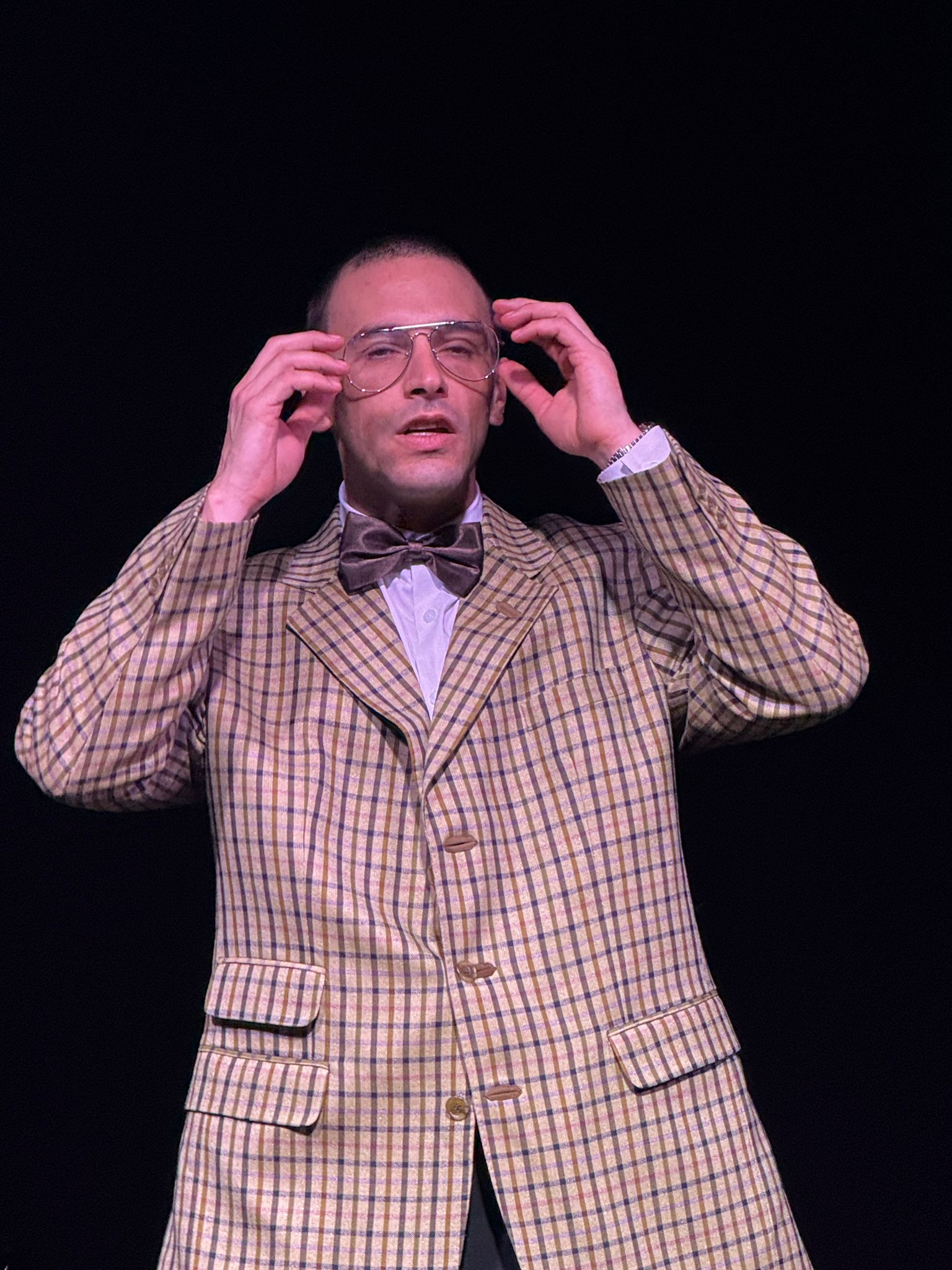
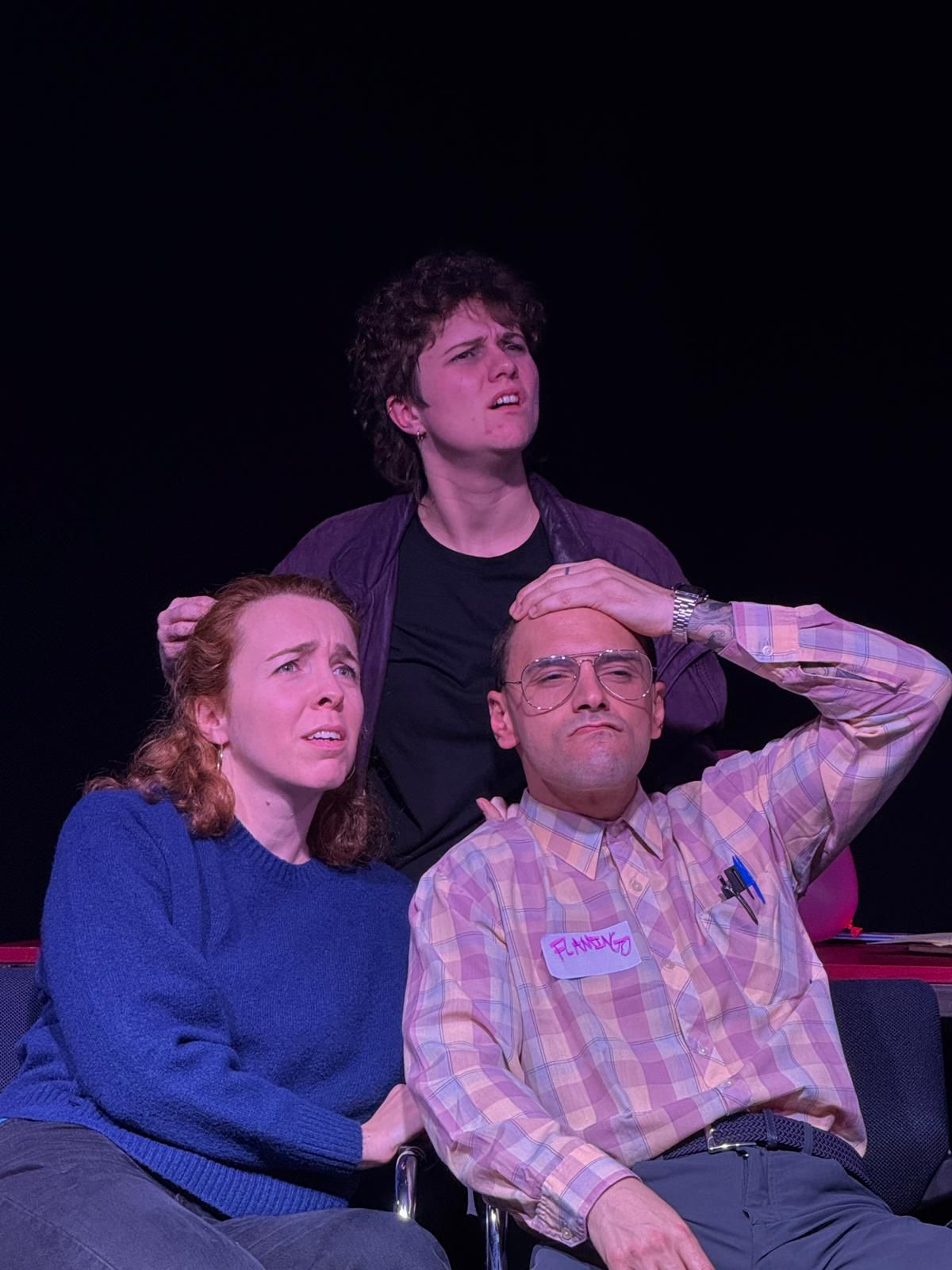
What The Startup became my first stage production. I joined as the understudy for Flamingo while also playing Lovebud and the Technodancer in the main cast. Working across these roles let me learn the rhythm of the play from multiple angles. Ben V. Butler’s script follows a chaotic Berlin startup team racing to secure investment, mixing satire, techno, and misdirected schemes. Meg, our director, gave the understudies their own performance, turning the track into a real ensemble project. Flamingo grew into a character I shaped through writing and exploration, blending his Freiburg idealism with softness and awkward and at times dorky charm. Performing him marked my first true step into acting.